
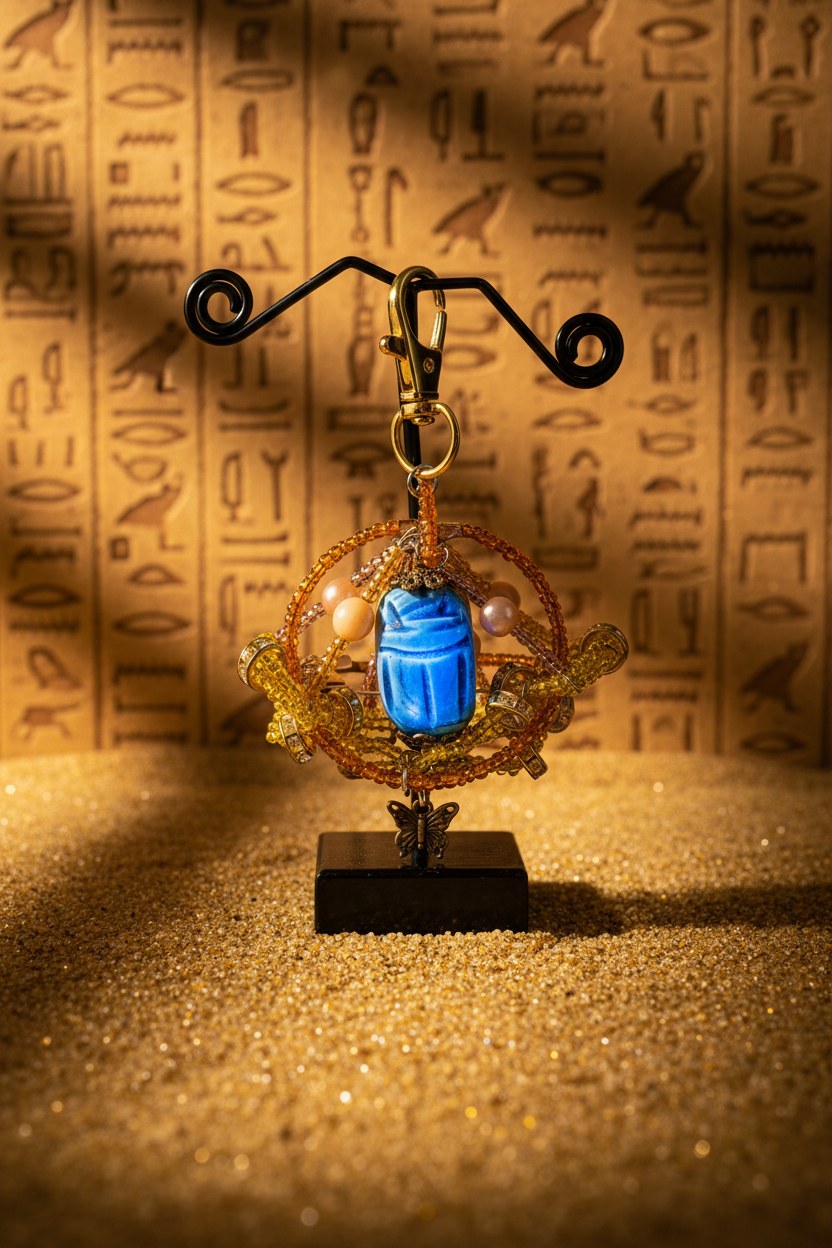
There is a particular kind of object that asks almost nothing of us. It appears quickly, is worn for a little while, and disappears without leaving much of a trace. Fast jewelry is built for that rhythm. It follows a passing look, arrives without much story, and is easily replaced when the next look arrives.
Reclaimed jewelry begins from a different question: what if a material already marked by use, repetition, or disregard were given enough attention to become something worth keeping? The answer is not a moral lecture about what anyone should wear. It is an invitation to notice what changes when a piece carries material history, visible labor, and a form that will not be repeated.
Fast is not the same as simple
There is nothing wrong with wanting adornment to be accessible, playful, or immediate. A small object can lift an ordinary day. The trouble begins when speed becomes the only value a piece is asked to hold. When jewelry is treated as a disposable finishing touch, the material is expected to be silent, the maker invisible, and the wearer ready to move on before the object has had a chance to become personal.
That cycle can make choice feel strangely flat. There is always another similar piece, another color, another reason to replace rather than repair, remember, or look again. The object has no time to gather a private association. It does not have to survive an evening, much less a season of someone’s life.
A slower piece is not necessarily serious or precious in the old-fashioned sense. It can be bright, strange, theatrical, or joyful. The difference is that it has been allowed to become specific. Its materials make demands. Its construction has been considered. Its silhouette may ask for a little space around it. Instead of disappearing into an outfit, it can become the detail that changes the whole conversation.
What reclaimed material remembers
A reclaimed material arrives with a past that cannot be designed from scratch. An aluminum tab has its own compact geometry. A bead may carry a nick, a color shift, or the feeling of another era. A found metal element brings a curve, weight, and industrial directness that polished new material might not offer. Those qualities are not problems to conceal. They are the beginning of the composition.
In the studio, reclaimed elements are not used as props for a story about virtue. They are used because they create tension. A familiar tab can become a radiating armature. A small piece of metal can sharpen the softness of lampwork glass or make a field of beadwork feel architectural. The source remains legible, but it is placed into a different relationship with light, movement, and the body.
That is why reclaimed jewelry can feel more alive than a perfect matching set. Its materials have different temperatures and different voices. Glass catches light. Beadwork gathers density. Metal creates a hard edge, a pause, or a line of movement. Instead of smoothing those differences away, the work lets them remain in conversation.

The material is only the first chapter
Upcycling is sometimes described as though the final transformation happens the moment a discarded object is saved from a bin. It does not. Rescue is not yet a form. The real work begins with looking at the material long enough to understand what it can do, then testing it against color, proportion, structure, and wear.
The Tri Axis Drop Earrings show that process in miniature. Their upcycled soda-can tabs are not trying to impersonate a more conventional metal component. Their repeated curves become a moving geometry, held together by dense beadwork at the center. The result keeps a trace of the ordinary source while making it behave like a small sculpture.
That transformation is slower than following a template. A found element may refuse the first idea. It may look too heavy beside one focal bead, too rigid against a certain color, or too familiar until the composition gives it a new role. The response is adjustment: add, remove, turn, test, and look from another angle. A one-of-one work keeps evidence of those decisions inside it, even when the collector only sees the finished balance.
Why one-of-one changes the relationship
When an object is made once, it does not ask to be collected as one more variation of a product. It asks to be met as itself. The precise arrangement of material, color, and gesture belongs to that single work. Another piece may share a mood, but it will arrive through a different chain of choices.
This can make choosing slower in a good way. A collector has room to ask: do I keep returning to this shape? Would I wear it, display it, or both? Does its strangeness feel like a private signal, a burst of color, a protective object, a small interruption to an otherwise familiar day? These are better questions than whether it matches everything.
One-of-one work is not about making scarcity perform for its own sake. It is about honoring the truth of a handmade process. The materials do not arrive in identical condition. The artist’s response is not mechanically repeatable. The final piece exists because these particular elements met at this particular moment. That is enough reason for it to remain singular.
There is a practical freedom in that, too. You do not have to build a uniform jewellery wardrobe or keep chasing a version of yourself that looks finished in every photograph. A singular work can be a starting point for a different kind of attention. It can make a familiar coat, shirt, or dress feel newly chosen. It can be the one object that keeps an outfit from becoming merely correct. Over time, those choices make a collection of personal signals rather than a pile of passing solutions.

Transformation without pretending the past vanished
The Phoenix Flame Amulet holds a version of transformation that feels truer than a polished before-and-after story. Its red focal, flame-like beadwork, and reclaimed metal elements do not erase where the material began. They let that history become part of the energy of the piece. The industrial curve becomes a gesture of flame. The discarded element becomes a carrier of color and motion.
This is the useful tension at the center of reclaimed jewelry. The source material is familiar enough to ground the work, while the finished form is unfamiliar enough to make you pause. You recognize something, then recognize that you have not seen it used this way before. The piece holds both facts at once.
For collectors, that tension creates a deeper kind of luxury. Luxury need not mean smoothness, sameness, or distance from the hand. It can mean specificity. It can mean a surface with a history, a construction that rewards close looking, or an object that feels more compelling after you have worn it several times. It can mean knowing the exact piece in front of you will not be reproduced for someone else.
Choosing a slower piece
Choosing reclaimed jewelry does not require a perfect philosophy. Start with attention. Look for clear material information and images that let you understand scale and construction. Ask whether the pictured object is the exact piece you will receive. Notice whether a maker explains how the work should be cared for. These small forms of clarity make it easier to build a real relationship with an object rather than buying into a vague idea of responsibility.
Then let your own response lead. A slower piece may be the one whose material contrast you cannot stop looking at, the one that changes when you move, or the one that makes your usual clothes feel newly awake. It may not be the most practical-looking choice. It may be the piece that gives you a little more room to be individual.
Wearable art is allowed to have presence. You do not need a special occasion to let a necklace, amulet, or pair of earrings become the center of an outfit. Begin with the work that feels most alive, then make space around it. A simpler neckline, a quieter color field, or an unadorned jacket can become the setting that lets the piece speak without competing for attention.

Keeping the story close
The Axis of Origin Necklace makes visible how many small decisions can gather around a single focal point. Lampwork glass, beadwork, and reclaimed metal do not resolve into one anonymous surface. They hold their differences, and the structure gives those differences a place to meet. The work becomes wearable, but it does not stop being a composition.
That is the promise of a slower object. It stays available for a second look. It can become part of a wardrobe, a display, a memory of a particular day, or a marker of a period when you decided to choose less by habit. Its value is not limited to the first moment you put it on.
Care helps preserve that relationship. Store a delicate piece flat or hanging as the maker recommends. Keep it away from moisture, perfume, and rough surfaces when the materials require it. Save the receipt and any note that came with the work. None of this needs to turn jewelry into something untouchable. It simply gives the object enough respect to keep accompanying you.
It also gives the work time to surprise you. Materials change character in different light. A bead that seemed quiet indoors can flash at dusk. A metal edge may make sense only when the piece moves with a shoulder or a hand. These are small encounters, but they are the opposite of disposable. They are how an object slowly becomes part of the visual language of your life.
Make room for the uncommon
Fast jewelry offers endless replacements. Reclaimed jewelry offers a different kind of possibility: an object with material memory, made through patient choices, that can become more interesting because it is not interchangeable. It asks you to look at an overlooked element and imagine a different future for it.
CrushelloCreations works from that possibility. The Origins collection brings lampwork glass, beadwork, metal, resin, and reclaimed elements into one-of-one wearable forms. Each piece is made once, with its own balance of structure, story, and expression. The current collection is there when you are ready to meet the work in detail, or you can spend time with the studio story before choosing.

The point is not to own the most things. It is to find the pieces that make you look again. That kind of attention is quieter than a trend cycle, but it has more room to last. It gives materials, makers, and collectors the chance to remain in dialogue long after the first moment of wanting has passed.
Questions from collectors
Materials with another life.
What is reclaimed jewelry?
Reclaimed jewelry uses existing or recovered materials as part of a new piece. In the right hands, the material’s history remains visible while its shape, color, and role are transformed through design and construction.
Is reclaimed jewelry the same as recycled jewelry?
The terms are often used loosely. Recycled materials are usually processed into a new raw material, while reclaimed or upcycled elements may remain recognizable and become part of a new composition. What matters most is that the maker explains the material clearly.
How should I care for one-of-one handmade jewelry?
Follow the maker’s care guidance for the specific materials. In general, keep delicate work away from moisture, perfume, and abrasive surfaces, store it with support, and handle detailed elements gently.
Why choose one-of-one jewelry?
One-of-one jewelry gives you the exact work shown, with its own material combination, construction, and character. It is a choice for collectors who value individuality and want a piece that is not reproduced as an identical copy.
Continue reading
Related posts

Collection Stories
Founding Collector Month: The Opening Chapter
A note from the studio on beginnings, one-of-one work, and the next chapter of CrushelloCreations.
Read the noteArt Collecting
How to Start an Art Collection That Feels Like You
A practical, pressure-free guide for new collectors choosing art, setting a budget, and building a collection with a point of view.
Read the note
Art Collecting
How to Choose Art for Your Home Without Playing It Safe
A practical way to choose art that works in your space, holds your attention, and feels more personal than a matching set.
Read the note